Wednesday, November 4, 2009

Roof, Road, and River

-Samuel Ganton-


The world as we know it is coming to an end. But it has been coming to an end every moment for centuries. The world is a very dynamic thing, constantly changing form, and it is naïve to think that something is permanent because it exists now.

Objects or situations may be thought of not only as what they are, but as part of a continuing journey. The philosopher Aristotle viewed objects as manifestations of change, as ‘pauses’ in a progression of materials and ideas through time and space, linked by a web of causation.

Our cities may be on the verge of revolutionary changes to their traditional systems of organization. We have much to learn from those who have been leading subsistence-based lives, and from the solutions they have created for themselves.

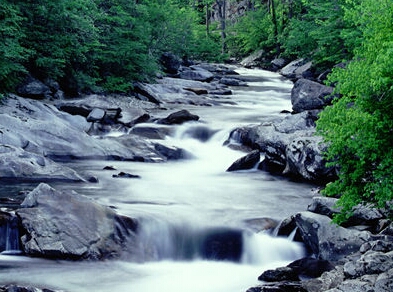
Everything intentional happens for a purpose, a definite cause, and the innovations of slum-dwellers and squatter communities are driven by basic needs. Three of the most necessary things are shelter, adequate transportation, and a clean water supply. One might refer to this as the search for a Roof, a Road, and a River.

Most newcomers to urban areas in the developing world are unable to take part in the official economy. They must create everything on their own – an unofficial economy of small service and supply businesses is awakened. There are many examples of how this ‘informal sector’ has been able to organize itself, perhaps with some support from outside, to provide basic infrastructure for its own constituent people.

One example comes from the community of Kibera, in Nairobi, Kenya. One of the largest slum areas in the world, Kibera has minimal public water supplies. Much of the population is forced to buy water from vendors, who sell it at extremely high prices.


Watch a video about the situation at:
http://clpmag.org/article.php?article=Kenyans-Tap-Sun-to-Make-Dirty-Water-Sparkle_029


The Kenya Water for Health Organization, based in Nairobi, is working to change the situation from within. It is banding together groups of women in the community who can buy and sell water, keeping prices far lower than those of the vendors. In the neighborhood of Makina, they have been able to connect supply tanks to the water mains outside Kibera.

In areas farther from direct supply, and when even the water mains are contaminated, a simple method of sanitation called SODIS is practiced. This process of solar disinfection involves placing bottles of contaminated water in direct sunlight for six hours. According to testing, ultraviolet rays sanitize the water as effectively as boiling or chemical treatments.
This method may seem somewhat dangerous to us, with our recent suspicions of plastic bottles. However, in subsistence living, nothing is perfect. It just has to work.

The lack of access to direct water supply in some areas of Kibera, and the necessity for water vendors, highlights another important characteristic of subsistence-based communities. They are defined by physical boundaries and connections, rather than our disconnected lines of communication.


In the community of Asa Branca, a small favela in Rio de Janeiro, growth is limited by proximity to nearby construction jobs. Better roads were needed, but since local government officials refused to get involved, the people had to create their own infrastructure.


Link to a map of Asa Branca: http://maps.google.ca/maps?hl=en&tab=wl


Gradually, the original dirt roads were paved: for each street that was improved, every household bordering it contributed materials and supplies. The inhabitants also contributed their time to the construction process.

Read more about Infrastructure in Asa Branca at: http://www.catcomm.org/en/?p=306


The concept of shelter can go beyond the idea of protection from the elements. Equally important is protection from the problems of crime and violence. In The Social Impact of Urban Design, Lee Rainwater points out that people “use space and barriers to further their defence against these various dangers.” (Rainwater 20) In Asa Branca, the improvement of transportation has an odd relationship with the provision of defensive shelter.

On the edge of the community is a doorway leading to the outside. Apparently making use of the upgraded roads, thieves on motorbikes would use this opening as an exit point after robberies. The people of the area came up with an extremely simple solution: they placed a thick metal pole in the centre of the doorway, allowing pedestrians to pass through, but blocking the way of other vehicles. This has contributed to Asa Branca’s current low crime rate and continued improvement.

From the water bottles of Kibera to the roads and built environment of Asa Branca, people in subsistence communities throughout the world are creating simple, logical solutions in response to particular problems they face. We have to awaken ourselves to our changing world, and ensure that these innovations do not slip under our bureaucratic, system-enslaved noses.


Bibliography:

Clark, David. Urban World / Global City. London: Routledge, 1996.

"Galeria pública de Asa Branca," http://picasaweb.google.com.br/comunidadeasabranca (accessed November 4, 2009).

Laquian, A.A., and Yeh, Stephen H.K. Housing Asia's Millions. Ottawa: International Development Research Centre, 1979.

Patrick Donohue, "Side Effects - A Day in the Community," http://www.brinq.com/ (accessed November 4, 2009).


Rainwater, Lee. The Social Impact of Urban Design. Chicago: University of Chicago Press, 1971.

“Road,” http://en.wikivisual.com/images/9/94/Road-sibiu.jpg (accessed November 4, 2009).

“River,” http://www.cc.gatech.edu/cpl/projects/graphcuttextures/data/interaction/LittleRiver.jpg (accessed November 4, 2009).

Sarah Stuttville, "Kenyans Tap Sun to Make Dirty Water Sparkle," April 13, 2008, http://clpmag.org/article.php?article=Kenyans-Tap-Sun-to-Make-Dirty-Water-Sparkle_029 (accessed November 4, 2009).

Simon Morfit, "Community Cohesion in Asa Branca," http://www.catcomm.org/en/?p=306, (accessed November 4, 2009).

“Wood Shingle Roofing [Online] Available http://www.hometips.com/catimages/012610_wood_shingle_roof.jpg (accessed November 4, 2009).

Labels: , ,

Tuesday, November 3, 2009

Building Shelter

-Milda Miskinyte-

Whether or not we think that shelter is a commodity or a right, we leave most of it up to the real estate market to distribute. People with no available resources to buy homes end up occupying land illegally, mostly around a large metropolis, and building shelters for themselves out of the materials they have at hand – usually commercial or residential waste. Most of the shelters in the world’s ever-growing slums are built from recycled materials.

Here, a boy sits inside a house that he and 14 other slum children helped build out of 10,000 plastic soda bottles in 30 days time in the Piedade slum, north of Rio de Janeiro. Plastic waste is the scourge of many mega cities and proper recycling facilities are often missing. Often, there is no functioning recycling system. The bartender next door supervised the building of the house to give the children an educational activity and clean the Guanabara Bay of thousands of bottles.


Ideas like this are borrowed and applied in the Western world. Dan Phillips started Phoenix Commotion, a construction business in his hometown, Huntsville, Tex., where he builds low-income housing out of salvaged items. Here, the reclaimed wood front door window is composed of the bases of old wine bottles.


Cargo container homes are popular because they are very resistant to fire, commonplace in slums. Because it is cheaper for a shipping company to buy new containers than to transport empty ones back to the origin, a stockpile of containers is created in port areas.


It is interesting that these shipping containers also interest people who can afford conventional housing, but, learning from the innovative ways slum-dwellers use recycled material as housing, choose to live and work in these alternatives.

This award-winning office design by Clive Wilkinson is made out of stacked shipping containers is the home office of Palotta TeamWorks, a US charity event company. The 47,000 square foot warehouse is filled with shipping containers that have been transformed into modern office spaces. This design layout saved the company money on construction costs, and it allowed the entire space to be more open and airy.


Abandoned train cars have also become home to many. Perhaps the most bizarre train reuse is the Russian trend of converting old train cars into Orthodox Christian churches. They range from the simple repurposing to the elaborate redesign, complete with adding an entirely new facade.


However, the price of fully converting these types of otherwise wasted material into comfortable homes with proper insulation/ventilation is, by slum standards, too high, so there is a need for sustainable, recycled, cheap housing for people who live in slums. Plausible designs for this kind of housing already exist, some already standing. The following is affordable dwelling for slums of Nairobi made from recycled materials designed by Jennifer Margell. The roofs of these homes are made to collect and filter gray water and rainwater, and they can also be opened to let out heat. The recycled plastic walls are made hollow, where the spaces are later filled with mud to serve as insulation. The green houses also provide an option for a bathroom with a self-composting toilet. The water storage tank is placed behind the bathroom, and keeps the utilities in one central area.

Perhaps, the inhabitants of these two different worlds – the slum and the conventional city – can continue to exchange ideas and learn from each other in order to help each other to face and fix the problems that they are encountering together: increasing world population, depletion of natural resources, increasing number of natural disasters caused by global warming, etc.


Bibliography:

Allianz. Recycle and Build. http://knowledge.allianz.com/en/media/galleries/recycled_architecture.html

Ecofriend. Eco Homes: Affordable dwelling for slums of Nairobi made from recycled materials. http://www.ecofriend.org/entry/eco-homes-affordable-dwelling-for-slums-of-nairobi-made-from-recycled-materials/

Open Architecture Network. Creative Adaptable Shelter. http://openarchitecturenetwork.org/projects/5549

Web Urbanist. 10 Clever Architectural Creations Using Cargo Containers: Shipping Container Homes and Offices. http://weburbanist.com/2008/05/26/cargo-container-homes-and-offices/

Web Urbanist. How to Subvert Your House: Buying, Designing and Building Cargo Container Homes. http://weburbanist.com/2008/08/25/buying-designing-and-building-cargo-container-homes/

Web Urbanist. All Aboard! Clever Recycled Train Car Homes, Offices & Hotels. http://weburbanist.com/2009/10/29/all-aboard-clever-recycled-train-car-homes-offices-hotels/

Where. Squatting in America. http://thewhereblog.blogspot.com/2009/04/squatting-in-america.html

Labels: , , ,

Straw Bale Alternative


-Anahita Farahani-

Slums are not what is wrong with urbanity in today’s modern world - although they require some reassessment they do carry certain advantages. They are situated extremely close to city centers, they carry a great entrepreneurial enthusiasm, as well as a tightly-knit community. Slums in a way are also environmentally friendly because the building materials they use would have been put towards a piling landfill anyway. Some urban planners advise we should completely destroy these residencies and replace them with entirely new projects. This method usually fails and in turn not only relocates slums but disrupts neighborhoods that had a development potential. Sometimes a little encouragement rather than destruction can be very beneficial in these situations. In some regions they are jumping on this idea by diminishing the problems within instead of completely destroying the slums themselves.

"We should not dismiss them because they look ugly, they look messy - they have sophisticated, participatory practices, a light way of occupying the land. Because people are trying to survive, creativity flourishes." - Teddy Cruz (Architect)

A green architecture firm from Berkeley - Daniel Smith & Associates are exploring and experimenting with the natural material of straw bale for housing construction. There are many benefits that come along with using straw bale - for example; the material is much stronger than a heavy stud wall and with the proper connections and stronger mesh and plasters its performance can exceed that of a plywood shear wall. The straw bale is able to take in a great deal of force in a way that eliminates cracking and breaking and instead absorbs the energy. Since straw bale is so thick walled and high in mass it is even able to react well in Earthquake-prone regions. Another benefactor would be the feature that straw bale has an even mix between insulation and thermal mass.

Daniel Smith and Associates are currently working on developing low cost minimal straw bale houses for Pakistan’s earthquake zones. The buildings are very small (400 - 500 square feet) and are built from only a couple thousand dollars for material costs (half the cost of a. This type of housing becomes very efficient to not only neighborhoods that are situated in disaster sectors but would be incredibly useful to neighborhoods that require more affordable living conditions.

The firm’s Kelly Lerner has also successfully helped with building straw bale housing in Mongolia and China. In Mongolia where the temperatures can reach 40 below, the straw bale houses still have not really required the installation of insulation. This is not only energy efficient but also cost efficient.

If people were able to get their hands on a cheaper material that is also stronger and more effective on a number of levels they would love to build a house out of it. A possible shelter development idea for slums would be to improve their way of living by making straw bale a more available material. The material itself is extremely abundant and more renewable than wood but we need to stir more awareness on the straw bale alternative.


Bibliography:

1. Tuhus-Dubrow, Rebecca. "Learning From Slums." Boston Globe. http://www.boston.com/bostonglobe/ideas/articles/2009/03/01/learning_from_slums/?page=1.


2. Daniel Smith & Associates Architects . http://www.dsaarch.com/index.html .


3. Waxman, Matt. "Architect Daniel Smith: The Strength in Straw ." Worldchanging. http://www.worldchanging.com/archives/006724.html


4. Jacobs, Jane. The Death and Life of Great American Cities. : Pelican , 1965.


Labels: , , ,

The Means of Survival


Slums are created from a series of forces: rapid rural to urban migration, increasing urban poverty, decay in infrastructure, lack of secure tenure, etc. As a result, these people have nowhere to go and nowhere to live and thus squatters settle near urban dwellings creating slums. What is common among any slum is inadequate shelter and the lack of planning. There are alleyways between homes that are often places of violence and sewage is disposed of in the streets. The inevitability of the slum dweller and their lives are caused by the surroundings they live in. Improving housing is improving life by creating employment from building and maintenance to a safer community through the organizations and networks of people.

I have looked into shelter solutions that are currently in practice in organizations looking to improve living conditions or provide disaster relief.

sheltertheworld- funding shelters for the homeless around the world. They work with IADDIC shelters to build rigid class houses that only require 2 people to erect. They are resistant to rot, mold, fire, insects and are fully insulated. For more information visit IADDIC's main website.


Concrete Canvas Shelters- I found this product while watching and episode of
daily planet. The shelter is described as a rapidly deployable hardened shelter that requires water and air to erect.


Water Shelter- Developed by Robert Nightingale. Designed for people in developing countries where floods are a common occurrence. It has been designed so users are self sufficient and target four major needs: shelter, water, product transport and information.

However, the solution cannot be solely put on adequate shelter. Survival also depends on other basic needs such as water. Clean drinking water is hard to find and in many parts of the world the demand for water exceeds the supply. Proper sanitation, filtration and storage must be considered as well and in a world with very few resources and technology, this is a huge obstacle to overcome.


Access to water is essential to life and overall well being. Early settlements have developed based on this need and the inability to find a source of portable water. Before the invention of clay pots and containers, people did not have the means to transport water from the rivers to their homes. Therefore, homes were situated right beside the water source to eliminate the issue of transport. In the modern age, we do not have the luxury of simply settling by the water and if we do it is often not safe to drink. As a result, water scarcity is a global problem but more so in the Third World. The United Nations Development Program estimate that 1.1 billion people lack safe water supply and even more do not have access to proper sanitation. The problem in many third world countries is not necessarily that they lack the sufficient resource of water but rather they lack the technology to extract and distribute it to their communities. Transportation of water through pipelines or trucks is often difficult because of poorly developed infrastructure.


Reach Out Water Solutions is an organization that helps in the supply of water to slum communities. They have created a efficient model that has worked in many projects.
Its seems that we are finding a trend among the many issues surrounding subsistence urbanity in that lack of transportation is impeding developing. Whether it is the transportation of resources to communities, people to their jobs or information from the world, transportation is the key to survival and growth. seems that we are finding a trend among the many issues surrounding subsistence urbanity in that lack of transportation is impeding developing. Whether it is the transportation of resources to communities, people to their jobs or information from the world, transportation is the key to survival and growth.


There is no doubt that investing in transportation can improve the overall situation of slum developments but careful considerations must be made to make the most of the few resources available. Many of these people rely on basic modes of transportation such as walking or cycling because they are too poor to afford motorized vehicles. In the past, much emphasis has been put on road construction to promote development in these areas. However, without any public transit put into place, roads were of no use to the poor as they were often displaced or had to revert back to the basic means of transport.

The implementation of a bus based mass transit system can benefit the poor which has been used in places such as Latin America. Operating costs were covered by passenger revenues , private owners covered the costs of buses and the construction and maintenance of infrastructure were publicly funded. In Bogota, Columbia, 37% of people who use the public mass transportation system are classified as poor and 47% are of middle income. Passengers saved $134 and 325 hours a year due to lower travel costs and shorter travel time. This system mainly benefits the lower income bracket and at the same time it is not heavily reliant on the wealthy to pick up the costs. Transportation can create employment opportunities through road construction and bus operation. Subsidizing bicycle ownership is another possibility in improving transport and could prove to be less costly than subsidizing road construction in slums. With improved transportation, time and money will be saved and therefore more income to flow back into the economy.

A physical network of roads, pipelines and various means of transportation link communities together but looking at a greater scale communications through a virtual network has the possibility of bringing the rich and the poor together creating a greater community working to improve the standard of living in the world as a whole. Many places are doing this already through the use of mobile phone services and the internet.


Companies such as GrameenPhone in Bangladesh have been practicing corporate social responsibility through programs to alleviate poverty. One of which is called Village Phone, allowing rural areas to have greater connectivity and has resulted in a consumer surplus for many of the people involved in their program. Village phones is an owner operated pay phone that generates money by selling this service to other villagers. This program is generally geared toward women to allow equal income earning opportunity which is quite rare otherwise. GrameenPhone's goal in their programs are to increase connectivity from urban to rural, spurring development and in the process provide employment and an overall easier way of living.

For more information visit
GrameenPhone Official Site


Viva Favela is an organization that aims to reduce social inequality and giving a voice to people in the slums through the investment in information and communications technologies. Correspondents of Viva Favela are slum dwellers that act as reporters to show another slide of living that is not communicated in the media. Viva Favela challenges typical views and shows the potential of positive social change. This organization has helped find employment for youth and provides the latest health information to their communities.

Visit Viva Favela
here

Connectivity is a huge factor in development and we must look beyond the traditional means to create a sustainable environment and promote growth in a subsistence world.

Divided City: Information Poverty in Nairobi's Slums

Bibliography

Brugmann, Jeb. Welcome to the Urban Revolution: How Cities Are Changing the World. New York: St Martins Pr, 2009.


"Corporate Social Responsibility ." Grameenphone Official site . http://www1.grameenphone.com/index.php?id=78 (accessed October 30, 2009).


Davis, Mike. Planet of Slums. New York: Verso, 2006.

"Iaddic Shelters." Rigid Shelter Solutions. http://www.iaddicshelters.com/urbanrenewal.php (accessed October 30, 2009).


Larson, Douglas. The Urban Cliff Revolution: New Findings on the Origins and Evolution of Human Habitats. Markham, Ontario: Fitzhenry and Whiteside, 2004.


"ReachoutWater." The Slum Water Program. http://reachoutwater.com/projects.html (accessed October 30, 2009).


"Shelter The World ." Shelter The World . http://www.sheltertheworld.com/index.html (accessed October 30, 2009).


United Nations Publications. "The Free Online Library." Divided City: Information Poverty in Nairobi's Slums.. http://www.thefreelibrary.com/Divided+City:+Information+Poverty+in+Nairobi%27s+Slums.-a0122092539 (accessed October 30, 2009).


"Viva Favela." An Inside Look at Viva Favela. http://www.vivafavela.com.br/publique/cgi/cgilua.exe/sys/start.htm?infoid=40489&sid=74 (accessed October 31, 2009).


Labels: , , , , , , ,